


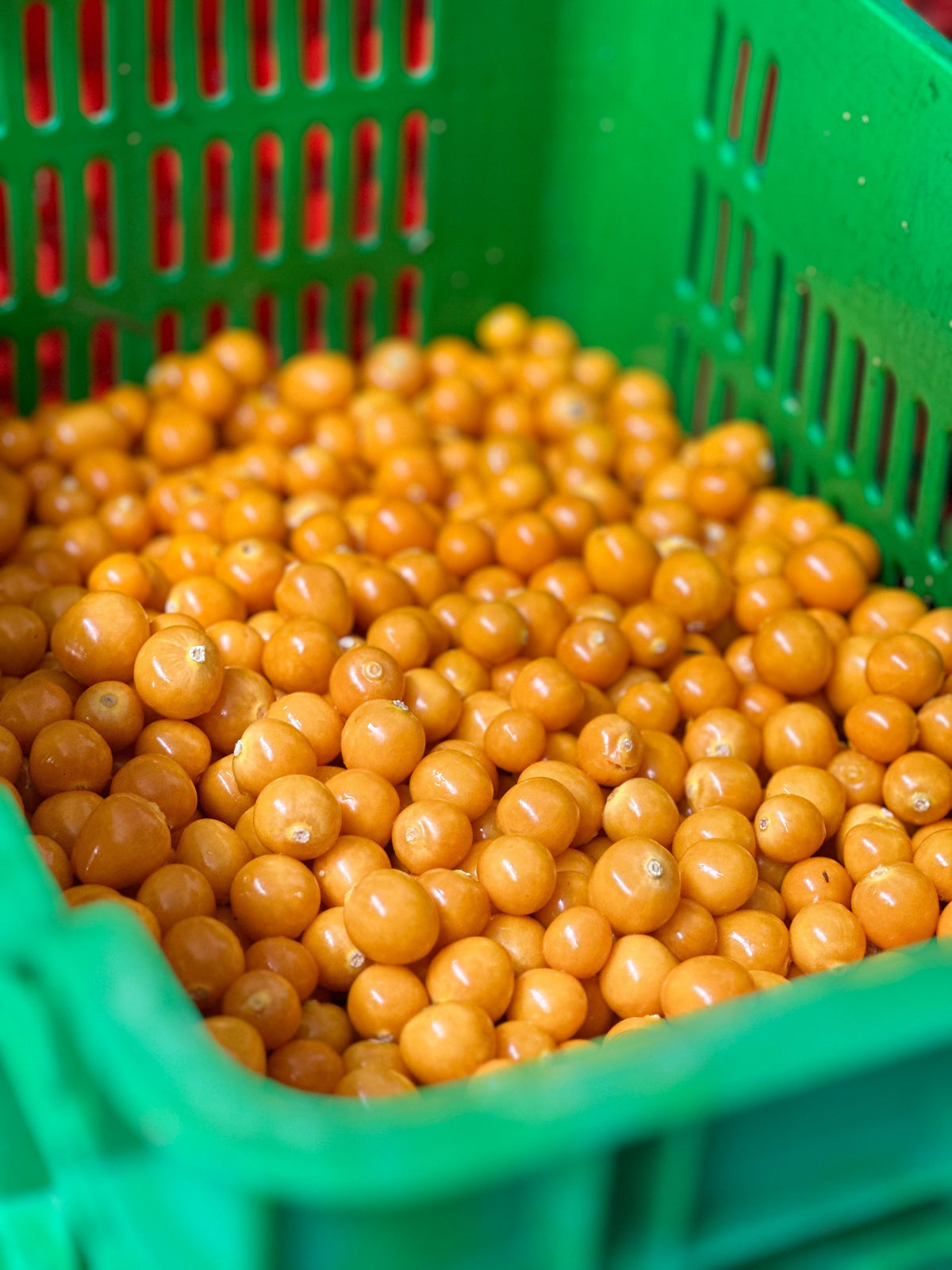
Golden berries are one of nature's most extraordinary little fruits - tart, juicy, nutrient-dense and wrapped in their own delicate paper shell as if nature packaged them herself. I recently had the privilege of visiting the factory in Peru where our golden berries are processed, and learning more about this wonderful fruit.
🫐 What Are Golden Berries?
Golden berries grow all across the world and are known by lots of different names: Physalis, Chinese gooseberries, Cape gooseberries, Incan berries and Golden berries. They are native to South America, but also grow in Asia. They are tart little balls, a little smaller than cherry tomatoes, which explode with juiciness in your mouth, encased in a delicate paper shell that makes it seem that they were packaged up by the fairies, just for you.
Often, when I eat fruits like these and raspberries, I marvel at how incredible it is that mother nature has created them to be the most perfect candies for us. I was eating a lot of them in Peru, it's easy to find them and they are so fresh and tangy. When we get them in the UK, they are usually a bit old, so I took advantage of being where they grew, and enjoyed them for breakfast frequently.
🍊 Why Golden Berries Are a Super Fruit
But of course, they are not just delicious, but fall into the category of super fruits for their high nutrient profile. They are high in antioxidants and rich in vitamin C (1 cup fresh berries contains 15mg). Like goji berries, they are a good source of beta-carotene. They are also known for their high bioflavonoid content, which is rich in antioxidants.
Beyond that, golden berries contain an impressively broad nutritional profile for a fruit - including vitamin A, vitamin K, B vitamins (particularly B1 and B3), iron, potassium, phosphorus and magnesium. They are also notably high in protein and fibre for a fruit, and their fats are predominantly of the unsaturated variety.
📜 A Brief History
One of the oldest cultivated fruits in South America, the berries have been grown in Peru and Chile for nearly 4,000 years. The crop was prized by the Incan nobility and there was a time when they were grown almost exclusively for royal consumption, lending them the name "Inca berries."
In the periods outside of its royal reservation, it has been an important staple for indigenous communities. It has a long history not only as a food source, but also folk medicine, being recorded for use both internally with a myriad of different applications and also as an external salve. 18th-century Peruvian women were even documented to be making perfumes out of it!
🏭 Inside the Factory
In the factory, I watched the workers remove the paper husks from the fruits at lightning speed; each worker can process around 20kg berries per hour. I was also pleased to learn that the husks are composted, and then the compost is returned to the farmers, to minimise wastage. Once they have been prepared and inspected, they are sent off to the industrial dryers, where they are dried at low temperatures in order to preserve nutrients.

🍫 How to Enjoy Golden Berries
I love to snack on a small handful of golden berries. They pair particularly well with cacao, and often when I am making my raw chocolate creations, I stir some into the chocolate. There's an awesome raw chocolate cake recipe in my Magic Kitchen book called Inca Redible Cake! There's also a Golden Salsa recipe there as well.
❓ Frequently Asked Questions
Q: What are golden berries and where do they come from? A: Golden berries - also known as Physalis, Cape gooseberries and Incan berries - are small, tart fruits native to South America, though they also grow across Asia. They grow encased in a delicate paper husk and are prized both for their bright, tangy flavour and their impressive nutritional profile. Raw Living sources ours directly from Peru, where they are processed at low temperatures to preserve their nutrients.
Q: What is the difference between golden berries and goji berries? A: Both are considered super fruits with a high antioxidant content and are good sources of beta-carotene, but they are quite different in flavour and origin. Golden berries are tart and juicy, native to South America, and belong to the nightshade family. Goji berries are sweeter and chewier, native to China, and have a long history of use in Traditional Chinese Medicine. Both make an excellent addition to a nutrient-dense diet.
Q: How do you eat golden berries? A: Golden berries are delicious eaten straight as a snack - a small handful is all you need. They pair particularly well with cacao and work beautifully stirred into raw chocolate. Magic Kitchen features two golden berry recipes: the Inca Redible Cake and a Golden Salsa - both worth trying.
Q: How are Raw Living's golden berries dried and why does it matter? A: Once prepared and inspected at the factory in Peru, our golden berries are sent to industrial dryers where they are dried at low temperatures. This is important because high heat destroys heat-sensitive nutrients - low temperature drying preserves the vitamin C, antioxidants and bioflavonoids that make golden berries worth eating in the first place.
Q: What do golden berries taste like? A: Golden berries are tart and tangy with a bright, citrusy edge, somewhere between a tomato and a passion fruit. Fresh berries straight from Peru are particularly vibrant; dried golden berries have a chewier texture with a more concentrated, sweet-sour flavour. Either way, they are one of the more addictive healthy snacks going. 🌟
Our organic Peruvian golden berries are sourced directly from the farm and dried at low temperatures - just as nature intended.


