


Hemp is one of the most misunderstood, versatile and historically significant plants on the planet. From ancient Chinese pharmacopoeias to George Washington's farm, it has been a cornerstone of human civilisation for thousands of years. This guide covers everything you need to know about hemp; its history, its nutritional profile, the difference between hemp and cannabis, and the full Raw Living hemp range.
🌿 Hemp: One of Nature's Most Versatile Plants
Hemp is one of the most interesting, diversely used plants that humans cultivate. It has a long, rich history of use. It's one of the only plant sources to have both omega-3 and omega-6 in their ideal ratio, and is rich in protein, fibre, vitamins and minerals.
All parts of the plant are used, from the seed, to flower, to leaf. Hemp is naturally pest-resistant, so it's grown without the need for pesticides or herbicides, making it one of the most eco-friendly crops on the planet. In 2024, a modern eight-house development was built in Wales using hempcrete made from locally-grown hemp. It can be used to make practically anything: delicious plant-based milks, comfortable clothes, even houses!
📜 A Brief History of Hemp
Hemp is one of humanity's oldest agricultural crops, predating wheat in some regions. Its first archaeological records come from China, where it has had a highly varied history of uses. The oldest artifacts found are textiles, where it was used to make everything from clothes to sails for ships. The first recorded use of paper also comes from China, and hemp was used to make it.
Shennong, the father of TCM, described hemp's medicinal properties nearly 5,000 years ago. It was classified as one of his 120 upper "noble" herbs, primarily valued for its yin-nourishing properties. He even spoke on the flower's psychoactive properties, noting that after extensive consumption one could "see demons and walk like a lunatic."
There are many stories and uses that can be shared about hemp, but perhaps most pertinent is its more modern history. Many of the founding fathers of the US were known to farm the crop - George Washington being the most famous amongst them. The early drafts of the Declaration of Independence were even written on hemp paper. Washington predicted the product would become more profitable than tobacco, and primarily used it to make rope and canvas for his fishing operations.
In the US in the 1930s however, as prohibition rolled in, people began to form a heavy association between the agricultural crop hemp and its psychoactive form cannabis. There was a complex arrangement of political reasons behind this push - not least the profits of the logging and paper industry. Hemp got swept up and categorised the same as cannabis, even when cultivated without THC and any of its psychoactive properties. The UK followed suit, classifying it as an illegal substance for over 20 years before allowing it back into production in 1993.
🌱 Hemp's Nutritional Profile
Hemp seeds are one of the most nutritionally complete plant foods available. They contain around 25% protein by weight, one of the highest of any plant source, and provide all nine essential amino acids, making them a rare complete plant protein. Around 30% of their content is healthy fats, with an exceptionally well-balanced ratio of omega-6 to omega-3 - approximately 3:1, considered close to optimal.
They are also a good source of vitamin E, magnesium, phosphorus, potassium, iron and zinc, as well as B vitamins including B1, B2 and B6. Their fibre content, both soluble and insoluble, comes primarily from the outer shell of the seed. Shelled hemp seeds contain less fibre but are higher in protein and fat, making them the more nutritionally dense option gram for gram.
🌿 The Difference Between Hemp and Cannabis
They are both the same plant, simply with different cultivation purposes. The Latin name of the plant is Cannabis sativa L., and the difference lies entirely in the THC content. Hemp is grown for fibre, seeds and food and must legally contain less than 0.2% THC.
They have been cultivated in such a way for thousands of years - the hemp plant's focus being on its nutritional quality or fibre durability. When cannabis is grown for recreational or medicinal purposes, the focus is instead on the quality of the flower - the most psychoactively potent part of the plant.
🥄 How to Use Hemp
As you can probably guess, there are a lot of great ways to consume hemp. It varies from product to product, but here's a quick guide based on what we have available:
Hemp oil is probably the easiest way of incorporating the seed into your diet - you can drizzle it on soups or salads or even take it directly from the spoon. It's not suitable for cooking with however, as its low smoke point means heat will degrade its delicate polyunsaturated fats.
Shelled hemp seeds have a mild, nutty flavour — you can sprinkle them on anything you can think of or use them for a whole range of delicious recipes. A really simple starting place is plant-based milks and creams: blending just two tablespoons of seeds with half a litre of water gives you your own homemade milk in seconds! They also make a great pesto or cheese base.
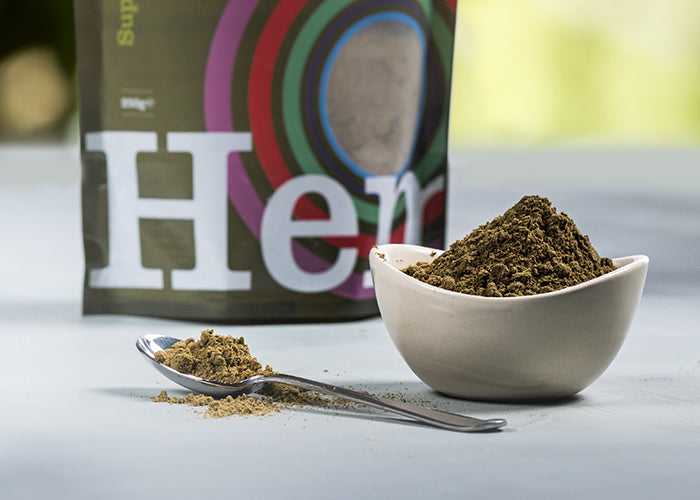
Hemp protein powder is a great alternative to soya and has a nicer flavour too. You can sprinkle it over things, use it in baking, desserts, smoothies - basically anything you want to slip some extra protein into.
Nut butter is arguably the most delicious form of consumption - spread it on bread and crackers or use it to make a salad dressing!
🛒 Our Hemp Collection
Our Raw Living Hemp Seeds are organic and of premium quality, grown sustainably in Lithuania and Estonia. Many hemp products are treated at high heat and taste bitter as a result; ours however are always handled at low temperatures, ensuring a great taste and preserved nutritional profile. A versatile staple in every vegan pantry.
Our Hemp Protein Powder is again organic, made from seeds grown in Europe and produced using cold-pressed techniques. It's a great eco-friendly and more natural alternative to soya when it comes to plant protein.
Super Salad Sprinkle is one of Kate's delicious creations - a nutrient and flavour-packed seasoning combining a base of hemp seeds with Chinese mushrooms, sea vegetables, wild algaes, garlic and pink salt. It promises a deep umami flavour that you can sprinkle over anything you fancy, not just salads!
Our Out of the Woods and Greener Grass powder blends are both made from a hemp protein base and are green and vibrant in colour. Packed with protein and essential minerals, they were created to provide a nutrient-dense formula at an accessible price.
Sun & Seed have two delicious options, with their hemp seeds again being organic and grown in Europe. Their oil is premium-quality, cold-pressed and available here. Their seed butter is made by grinding the seeds through a traditional stone mill, you can find it here.
PurO3 uses a revolutionary new ozone technology called microfluidic platform technology, fed with an ultra pure oxygen source. What makes this method special is the pure form of ozone produced without any heat, allowing PurO3 to provide the highest quality ozonated oil products on the market. The oil is designed to be used as a skincare product, but it's good enough to eat too! You can find their hemp seed oil available pure or in capsules.
Dr Bronner's is an independent family-owned business over 150 years old. Their products are all certified fair-trade and organic, using 100% recycled plastic for their packaging. We have four different body soaps available here, all enhanced with hemp seed oil to help nourish your skin.
Last but not least is the Organic Hemp Face Cloth by Living Libations. It has a flat-weave design which makes it great for oil-cleansing, with a super soft fleece-like texture that works well even with sensitive skin. A great pairing for Dr Bronner's soap or PurO3 oil!
FAQs:
Q: Is hemp the same as cannabis? A: Yes and no - they are the same plant species, Cannabis sativa L., but cultivated for entirely different purposes. Hemp is grown for its seeds, fibre and nutritional value, and must legally contain less than 0.2% THC in the UK. Cannabis grown for recreational or medicinal use is cultivated to maximise THC content in the flower. The two have been legally conflated for most of the 20th century despite being grown for completely different purposes for thousands of years before that.
Q: Is hemp environmentally friendly? A: Remarkably so. Hemp is naturally pest-resistant, meaning it requires no pesticides or herbicides to grow. It grows quickly, requires relatively little water compared to other crops, and every part of the plant is usable - from the seed to the fibre to the flower. It has historically been used to make everything from textiles and rope to paper and food, making it one of the least wasteful crops on the planet.
Q: What is the difference between hemp seeds, hemp oil and hemp protein? A: All three come from the same plant but offer slightly different nutritional profiles. Hemp seeds are the most versatile - eaten whole or shelled, they provide a balance of protein, healthy fats, fibre and minerals. Hemp oil is cold-pressed from the seeds and is particularly rich in omega-3 and omega-6 fatty acids in their ideal ratio - best used raw as a drizzle rather than for cooking. Hemp protein powder is made from the seed after the oil has been pressed out, leaving a high-protein flour ideal for adding to smoothies, baking and recipes.
Q: Is hemp a complete protein? A: Yes - hemp is one of a small number of plant foods that provides all nine essential amino acids, making it a rare complete plant protein. It contains around 25% protein by weight, making it one of the highest protein plant sources available. It's particularly notable for its high levels of the amino acid arginine.
Q: Can I cook with hemp oil? A: Hemp oil is best kept raw. It has a low smoke point, meaning heat degrades its delicate polyunsaturated fats - particularly its omega-3 content. It's best used as a finishing oil: drizzled over salads, soups or stirred into dishes after cooking. Stored in a cool, dark place and used raw, it retains its full nutritional profile.
Hemp has been one of humanity's most useful plants for thousands of years - and Raw Living's range makes it one of the easiest to incorporate into your daily life.


