


Miso is a fermented Japanese soya food made using the special koji fermentation culture and different types of grains. Rich in beneficial enzymes, probiotics, and amino acids, it has been a cornerstone of Japanese cuisine and natural medicine for centuries — and for good reason. Whether you're new to miso or looking to deepen your understanding of this remarkable food, this guide covers everything you need to know.
🫛 How is Clearspring miso made?
Clearspring miso is still made as slowly and authentically as possible, a rare practice in today's fast moving world.
Slow production and traditional fermentation create a rich and complex flavour and the best possible health benefits for miso. Clearspring miso is made using organically grown ingredients, with handmade koji that is full of potent digestive enzymes to break down the beans and grains, whole soya beans that undergo long, slow cooking, and natural ageing in seasoned cedarwood kegs over many months at ambient temperature.
Sadly, very little miso in Japan is still made this traditional way. Some may be naturally aged, but has koji prepared using an automated process which excludes the wild organisms that give personality to the miso and benefit digestion; think how traditional sourdough bread compares with quick yeast baked bread and you will get the picture. Moreover, it will be fermented in stainless steel or plastic tanks that fail to impart the subtle nuances of flavour that cedarwood provides. Such standardised miso has a uniform taste and unvarying texture.
The majority of miso produced today sits at the lower end of the quality scale. This is produced in just a few weeks using a rapid, high temperature automated process with no real ageing. Whilst it is cheap to produce, it has a dull, flat and lifeless quality when compared with traditionally made miso.
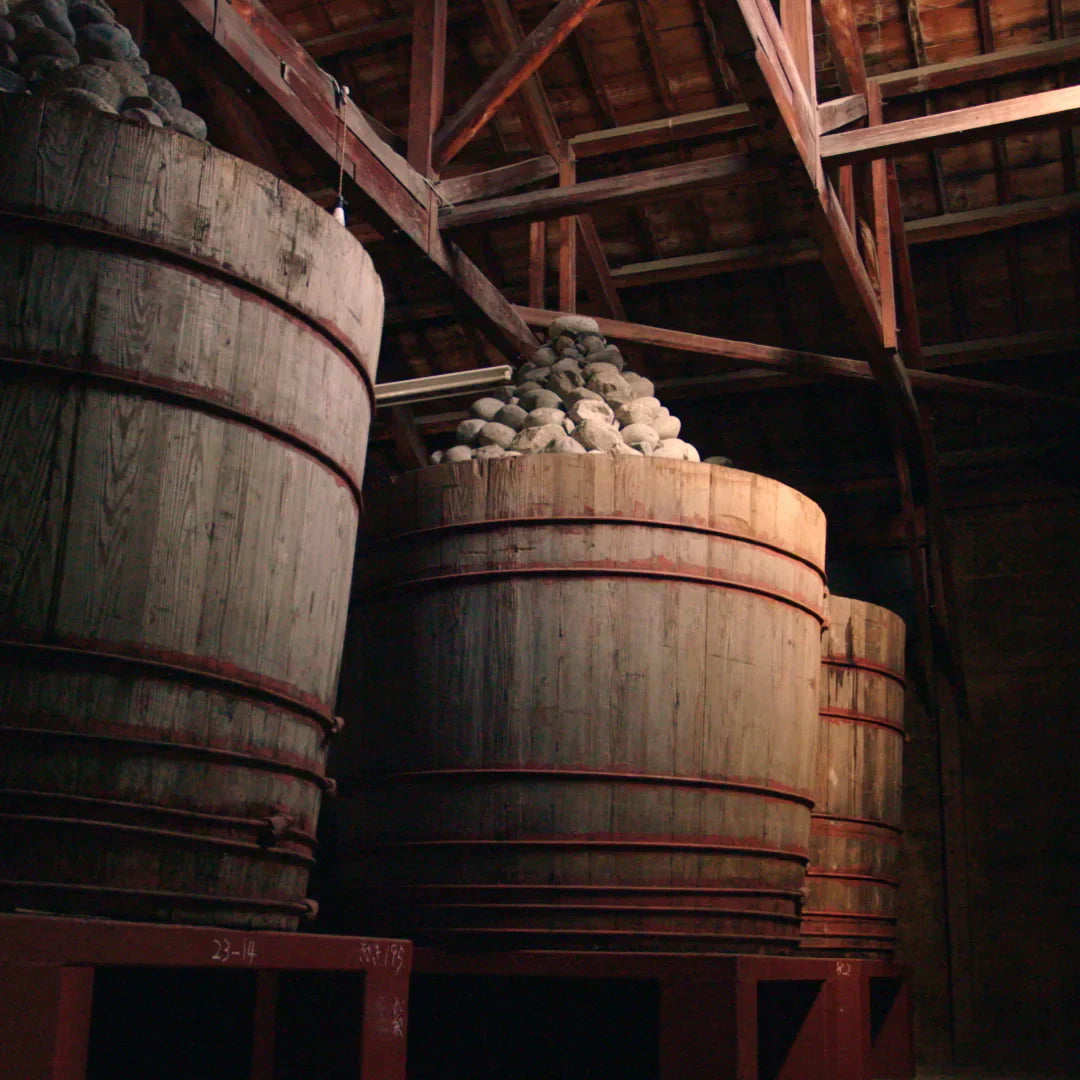
🪵 Is miso always fermented in cedarwood kegs? And why are stones piled on top? 🪨
Clearspring's long-fermentation misos are always aged slowly in cedarwood kegs. This is in contrast to many modern miso manufacturers who try to mimic the traditional way by carrying out accelerated temperature controlled fermentation in plastic or stainless steel holding tanks. Traditional methods result in a paste that is full of vitality, character and complexity. Heavy stones must be placed on top of the keg to encourage the fermentation by adding weight on top of the mash.
What are the health benefits of miso?
Miso is a nourishing, high energy whole food that can help maintain health and vitality. Centuries of Japanese folklore and recent scientific studies have both shown that miso is a powerful health food, and a concentrated source of essential nutrients.
Production of miso begins by cooking soya beans and combining them with koji (grains or soya beans inoculated with Aspergillus oryzae mould spores), salt and water. This mixture is then fermented and aged over several months in large cedarwood kegs.
Over time, the enzymes from the koji, along with naturally occurring yeasts and bacteria, gradually break down the complex grains and beans into readily digestible amino acids, fatty acids and simple sugars, making miso an excellent food for strengthening digestion.
Friendly bacteria
The same enzymes that help with fermentation during the making of miso can also help with digestion of a meal that includes miso, and can even destroy substances in food that cause food allergies. Miso also acts like a digestive tonic, and once established in the intestine, the acid-loving bacteria found in abundance in unpasteurised miso promote health and stamina.
Beneficial bacteria found in the small intestine may also play a role in supporting the management of conditions such as constipation, yeast infections (candidiasis), and lactose intolerance. Emerging research suggests that certain strains of beneficial bacteria may also have a role in supporting health in relation to more serious conditions such as coronary heart disease and cancer.
Miso as a health protector
John and Jan Belleme, authors of The Miso Book and researchers with twenty-five years of experience studying miso, describe regular miso consumption as the best health insurance available. In some parts of China and Japan, drinking miso soup every day is still associated with a long, healthy life. Starting the day with miso soup is said to alkalise the body and help neutralise the acidity caused by the overconsumption of meat, sugar and alcohol.
Miso has been used for centuries in traditional folk medicine in relation to a range of conditions including weak digestion, low libido, and certain intestinal infections. More recently, emerging scientific research has begun to explore miso's potential role in supporting health in relation to conditions such as cardiovascular disease, high blood pressure, and certain forms of cancer, among others.
Soya isoflavones
Many of miso's reputed health properties have been associated with a group of biochemicals found in soya called isoflavones - compounds that have a similar shape to oestrogen and which various scientific studies have indicated may be effective in reducing the risk of cardiovascular disease and cancer. Research has also shown that fermented soya products contain much higher levels of isoflavones than raw soya beans, and in particular genistein, a plant isoflavone that is a potent anti-cancer agent. Studies have shown that the occurrence of certain types of cancer is lower in countries that have a tradition of consuming soya based foods, such as Japan, China and Singapore. (1)(2)
(1) From 'Foods To Fight Cancer' by Professor Richard Beliveau and Dr Denis Gingras (2) From 'Japanese Foods that Heal' by John and Jan Belleme
What's the difference between different types of miso?
Different miso types are created through altered fermentation times, ingredients and differing colours. The flavours range from mild and sweet to intense and salty. White miso typically has the shortest fermentation time - from just a few weeks to a few months - and yields a sweeter, smoother flavour. Yellow and red misos have longer fermentation times and typically contain less koji. Yellow sits in the middle of the two, typically fermenting for 6-9 months, whilst red miso typically ferments for a year or more and carries the strongest, most robust flavour of the three.
Miso can also be named after its base ingredient — such as barley or chickpea — as these bases offer a unique and interesting flavour profile that goes beyond colour categorisation alone. Clearspring's range of artisanal misos takes this ingredient-forward approach, offering options to suit every palate and dietary need.
What's the difference between Clearspring's misos?
Sweet White Miso is crafted from an old family recipe from Japan's Nagano prefecture, offering a delicious balance of savoury and sweetness whilst still packing an umami punch. Lightly fermented for just 2–8 weeks, it's the mildest and most versatile of the range - ideal for dressings, glazes, and light soups.
Barley Miso - known in Japan as mugi miso - is rooted in a tradition of rural, farmhouse fermentation, historically made for personal use rather than commercial production. Clearspring's version is aged in cedarwood kegs for 1–2 years, resulting in a relatively dark, rich paste with a distinctive malty, earthy flavour. Deeper than white miso but with its own rustic sweetness, it sits in a category of its own rather than mapping neatly onto the red end of the spectrum.
Chickpea Miso is Clearspring's most innovative offering - a soy-free and gluten-free miso made from organic chickpeas and cultured rice, produced by a third-generation family maker in Nagano using the same traditional methods as the rest of the range. In flavour it sits closest to white miso - mild, slightly nutty, and umami-rich - making it an excellent option for anyone avoiding soy or gluten without wanting to compromise on depth of flavour.
Reduced Salt Miso contains 25% less sodium than the Brown Rice Miso whilst retaining the same authentic, enzyme-rich flavour. A great everyday option for those keeping an eye on salt intake.
Hatcho Miso sits at the far end of the spectrum entirely. Revered for centuries as the most celebrated miso in Japan - historically supplied to the Emperor - it is made purely from soybeans and aged for up to three years in large seasoned cedarwood kegs by craftsmen with five centuries of tradition behind them. The result is an intensely dark, dense paste that is twice as high in protein as other misos, lower in salt, and carries a deep, smoky, complex flavour unlike anything else in the range. A little goes a long way. 🍜
🫕 Should miso be cooked?
Unpasteurised miso contains an abundance of live enzymes that can be destroyed through prolonged cooking. However, other health and nutritional properties, as well as the flavour of miso, are left unaltered by cooking, and some recipes suggest cooking miso to develop the flavour of other ingredients in the dish. To maximise the enzymatic benefits of miso, choose an unpasteurised variety (or freeze-dried miso soup) and select recipes where miso is added towards the end of cooking.
🍜 What kind of dishes can miso be used in?
Miso can be used instead of salt to flavour dishes such as soups and stews. It combines well with ingredients such as ginger, garlic, rice vinegar, tahini and citrus zest and juice. Check out Kate Magic's Ramen recipe here.
❓ Miso FAQs
Q: Is miso good for gut health? A: Yes, miso is one of the most well-established fermented foods for digestive support. Unpasteurised miso contains live enzymes and beneficial bacteria that support healthy gut flora, aid digestion, and may help with conditions like bloating, constipation, and lactose intolerance. Choose an unpasteurised variety and add it toward the end of cooking to preserve those benefits.
Q: What's the difference between white, yellow, and red miso? A: The main difference is fermentation time, which affects colour, flavour intensity, and salt content. White miso ferments for just a few weeks to a few months, producing a mild, sweet flavour. Yellow miso sits in the middle at around 6-9 months, while red miso ferments for a year or more, developing a bold, deeply savoury profile. The darker the miso, the more intense and salty the flavour.
Q: What is hatcho miso? A: Hatcho is the most revered miso in Japan - a pure soybean miso aged for up to three years in cedarwood kegs. It has twice the protein of most other misos, a lower salt content, and an intense, smoky depth of flavour. It's produced in Okazaki, Japan, to a recipe that is over 400 years old, and was historically the miso supplied to the Emperor of Japan.
Q: Is there a soy-free miso? A: Yes, Clearspring's Chickpea Miso is made from organic chickpeas and cultured rice rather than soya beans, making it both soy-free and gluten-free. It has a mild, slightly nutty flavour similar to white miso and can be used in exactly the same way. It's produced using the same traditional Japanese methods as the rest of the Clearspring range.
Q: Does miso need to be refrigerated? A: Miso is best stored in a cool, dark place before opening. Once opened, keep it refrigerated. Because it's a living, fermented food, the paste will continue to slowly ferment over time - the colour may deepen and the flavour intensify, but this doesn't mean it has gone off. Unpasteurised miso keeps well for a long time when stored properly.


