


For a long time, salt was considered a dirty word in health food circles. If we grew up only knowing iodised table salt - the kind we poured over our chips - we were taught that salt was high in sodium, bad for blood pressure, dehydrating, and even harmful to the kidneys.
How times have changed! Now, natural, mineral-rich salt is an essential staple in any health seeker’s kitchen.
But how much do you really know about the different types of salt we stock here at Raw Living? Here’s a breakdown of the benefits of natural salts, including how they compare to the ever-popular Himalayan pink salt.
Basic Composition: Sodium & Moisture Content
One of the biggest differences between salts is their sodium content and moisture retention. Celtic salt is the lowest in sodium and has the highest moisture content, making it ideal for adding to water for electrolytes since it dissolves easily.
| Salt Type | Sodium Content (per 100g) | Moisture Content |
|---|---|---|
| Celtic Salt 🌊 | ~33g | High (moist, dissolves easily) |
| Himalayan Salt ⛰️ | ~36-38g | Low (dry, crystalline) |
| Icelandic Salt ❄️ | ~37-39g | Low (fine, flaky) |
| Maras Salt 🌄 | ~35-37g | Moderate (coarse, slightly brittle) |
🌊 Celtic & Himalayan Salt (80+ Trace Minerals)
✔ Celtic Salt (harvested from seawater) and Himalayan Salt (from ancient sea beds) contain over 80 trace minerals, including:
• Magnesium (contributes to normal muscle function)
• Potassium (electrolyte balance)
• Calcium (bone health)
• Iron (oxygen transport)
• Zinc, Copper, Manganese, and more
These salts are known for their high mineral complexity due to the large variety of trace elements retained in the evaporation or mining process.
🌋Icelandic Salt (Lower Trace Mineral Content)
✔ Icelandic salt is known for its purity rather than its mineral complexity.
✔ It contains sodium and naturally occurring iodine but lacks the broad spectrum of minerals found in Celtic or Himalayan salt.
✔ Because it is produced using geothermal evaporation, it retains a clean, crisp taste but doesn’t have as many trace minerals.
🌄 Maras Salt (Higher in Calcium, Fewer Trace Minerals)
✔ Maras salt has a unique mineral profile because it comes from underground saltwater springs in the Andes.
✔ While it contains some trace minerals, it does not have 80+ like Celtic or Himalayan salt - instead, it is particularly high in calcium and potassium.
✔ It has a mild, slightly sweet taste due to its mineral balance.
🌊 Celtic & Himalayan Salt (80+ Trace Minerals)
Celtic Salt (harvested from seawater) and Himalayan Salt (from ancient sea beds) contain over 80 trace minerals, including:
- Magnesium (muscle relaxation)
- Potassium (electrolyte balance)
- Calcium (bone health)
- Iron (oxygen transport)
- Zinc, Copper, Manganese, and more
These salts are known for their high mineral complexity, as they retain a wide variety of trace elements during evaporation or mining.
🌋 Icelandic Salt (Lower Trace Mineral Content, Ultra-Pure)
✔ Icelandic salt is one of the purest salts available, thanks to its geothermal evaporation process, which eliminates microplastics and pollutants.
✔ It contains sodium and naturally occurring iodine, but lacks the broad mineral spectrum found in Celtic or Himalayan salt.
✔ Because of its clean, crisp taste, it's ideal for gourmet cooking rather than mineral supplementation.
💡 Best for: High-end cooking, pure salt taste, clean seasoning.
🌄 Maras Salt (Higher in Calcium, Fewer Trace Minerals)
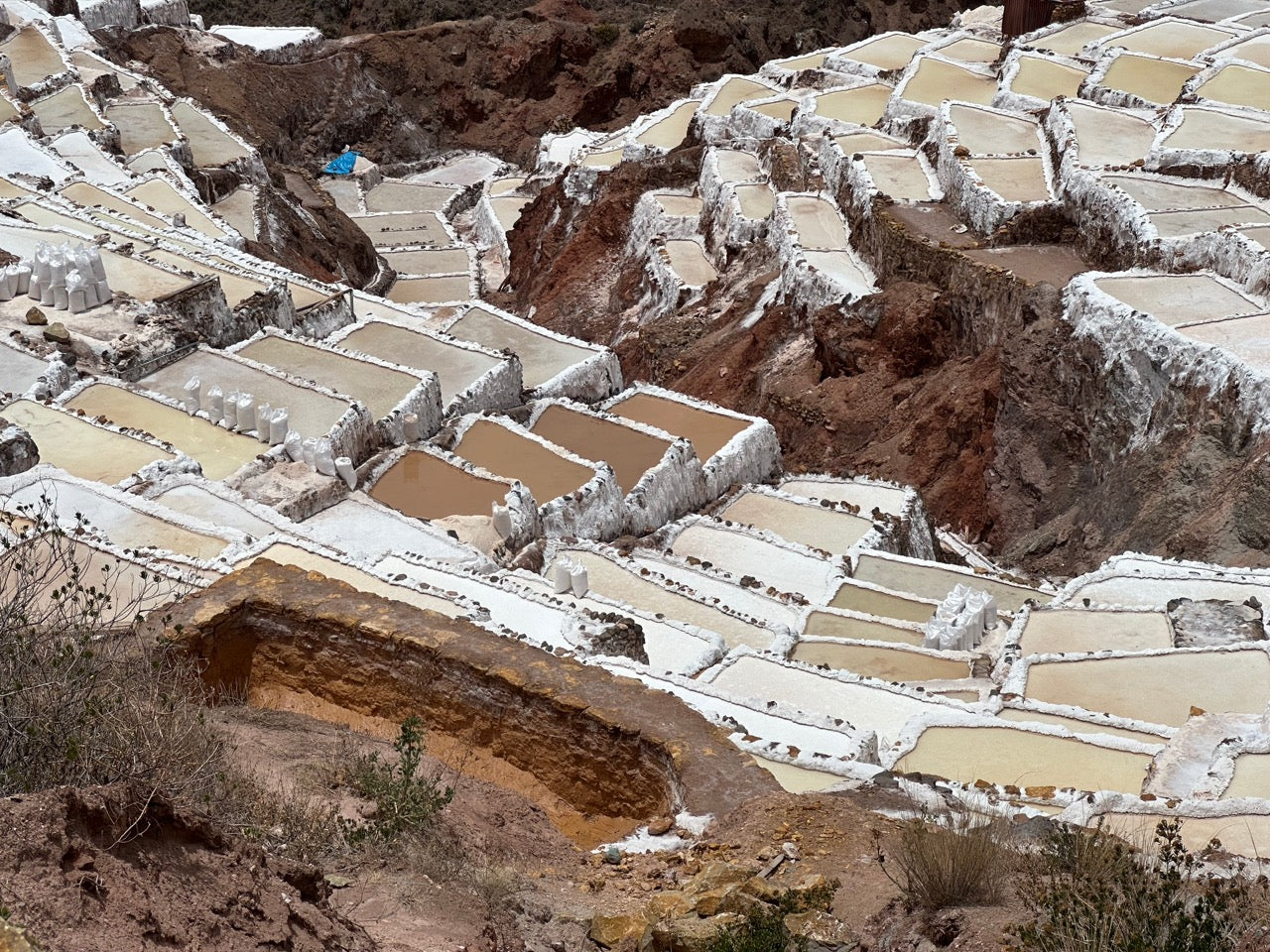
✔ Maras salt comes from underground saltwater springs in the Andes and is harvested in the Sacred Valley of Peru (pictured above).
✔ While it contains some trace minerals, it does not have 80+ minerals like Celtic or Himalayan salt - instead, it is particularly high in calcium and potassium.
✔ It has a mild, slightly sweet taste and a delicate crunch, making it perfect for gourmet cooking.
💡 Best for: Bone health (high calcium content), finishing dishes, adding a light crunch.
🖤 Kala Namak (Himalayan Black Salt, Eggy Salt)
✔ Kala Namak, also known as Himalayan Grey Salt or Eggy Salt, is a volcanic rock salt with a distinct sulfuric aroma and taste, resembling boiled eggs.
✔ Sourced from the same ancient deposits as Himalayan Pink Salt, its sulfur content gives it a strong umami flavour, making it a staple in Indian, Pakistani, and South Asian cuisines.
✔ It’s especially popular in vegan cooking for mimicking the taste of eggs in dishes like tofu scrambles and chickpea omelettes.
💡 Best for: Vegan egg substitutes, Indian cuisine, bold umami flavour.
Which Salt Should You Choose?
| Best For... | Recommended Salt |
|---|---|
| Hydration & Electrolytes 💧 | Celtic Salt (higher magnesium & potassium, retains moisture) |
| Mineral-Rich Cooking 🍽️ | Himalayan Salt (higher iron, drier texture) |
| Salt Baths & Skincare 🛁 | Himalayan Salt (used in bath soaks & skincare) |
| Fermentation & Natural Foods 🌿 | Celtic Salt, Maras Salt, or Icelandic Salt (retains moisture, excellent for fermentation) |
| Best Taste & Flavor 👅 | Icelandic Salt, Maras Salt, or Kala Namak (each offers a unique gourmet experience) |
Final Thoughts
Each of these salts brings its own unique benefits, whether you're looking for hydration, mineral content, or the best flavour for your cooking. Choosing the right salt depends on your personal needs—do you want electrolytes, pure taste, or high calcium?
✔ If you need hydration & minerals, Celtic Salt is your best bet.
✔ If you're after flavour & versatility, Icelandic & Maras Salt are top choices.
✔ If you love bold, umami flavours, Kala Namak is a must-have.
Whatever your preference, choosing natural, unrefined salt is a simple way to add mineral complexity to your diet while enhancing your food.
❓ Frequently Asked Questions
Q: What is the difference between Celtic salt and Himalayan salt? A: Both contain over 80 trace minerals, but they come from very different sources - Celtic salt is harvested from seawater off the coast of Brittany, while Himalayan salt is mined from ancient sea beds in Pakistan. Celtic salt has a higher moisture content and lower sodium level, making it the softer, moister of the two. Himalayan salt is drier and more crystalline, making it better suited to grinders and dry seasoning.
Q: Is natural salt better than table salt? A: Table salt is heavily refined, stripping out most of the naturally occurring minerals and often adding anti-caking agents and synthetic iodine. Natural unrefined salts like Celtic, Himalayan and Maras retain their full mineral profile, including trace elements not found in standard table salt. For those looking to use salt as more than just seasoning, natural salts are the more nutritionally complex choice.
Q: What is Kala Namak and why does it taste like eggs? A: Kala Namak, also known as Himalayan black salt, is a volcanic rock salt with a distinctly sulphuric aroma that closely resembles the smell and taste of boiled eggs. This is due to its naturally high sulphur compound content, which develops during its formation in ancient volcanic deposits. It's particularly popular in vegan cooking as a way of adding an egg-like flavour to dishes like tofu scrambles.
Q: Which salt is best for cooking? A: It depends on what you're after. Icelandic and Maras salts are both excellent finishing salts with clean, distinctive flavours suited to gourmet cooking. Celtic salt dissolves easily, making it a good choice for brines, fermentation and adding to water. Himalayan salt's dry, crystalline texture works well in grinders for everyday seasoning.
Q: Is there really arsenic and lead in Celtic salt? A: Trace amounts of naturally occurring elements including lead can be found in all natural sea salts due to their environmental origins - this is not unique to Celtic salt. The levels present are extremely low and well within safe consumption limits as defined by EU food safety and organic food standards. When considered against the small quantities of salt typically consumed daily, the amounts involved are negligible.
Shop Our Salts at Raw Living
Explore our collection of mineral-rich salts and find the perfect one for your needs. Click here to browse our selection!
Please Note: There has been some information circulating recently suggesting that Celtic Sea Salt contains arsenic, aluminium, and lead, and should be avoided. While trace amounts of these elements can be found in all natural sea salts due to their environmental origins, the levels present in Celtic Sea Salt are extremely low and well within safe consumption limits as defined by EU food safety and Organic food standards.
Although there is no published data specifically for our particular salt, estimates suggest lead content may be around 553 ppb, which equates to just 0.000055%. When you consider the tiny quantities of salt typically consumed in a day, this becomes an infinitesimally small amount - far below anything that would pose a risk to health.
Celtic Sea Salt’s rich mineral profile - including beneficial elements like calcium, magnesium, and potassium - makes it a valuable addition to a balanced diet, supporting hydration, electrolyte balance, and overall well-being.


