


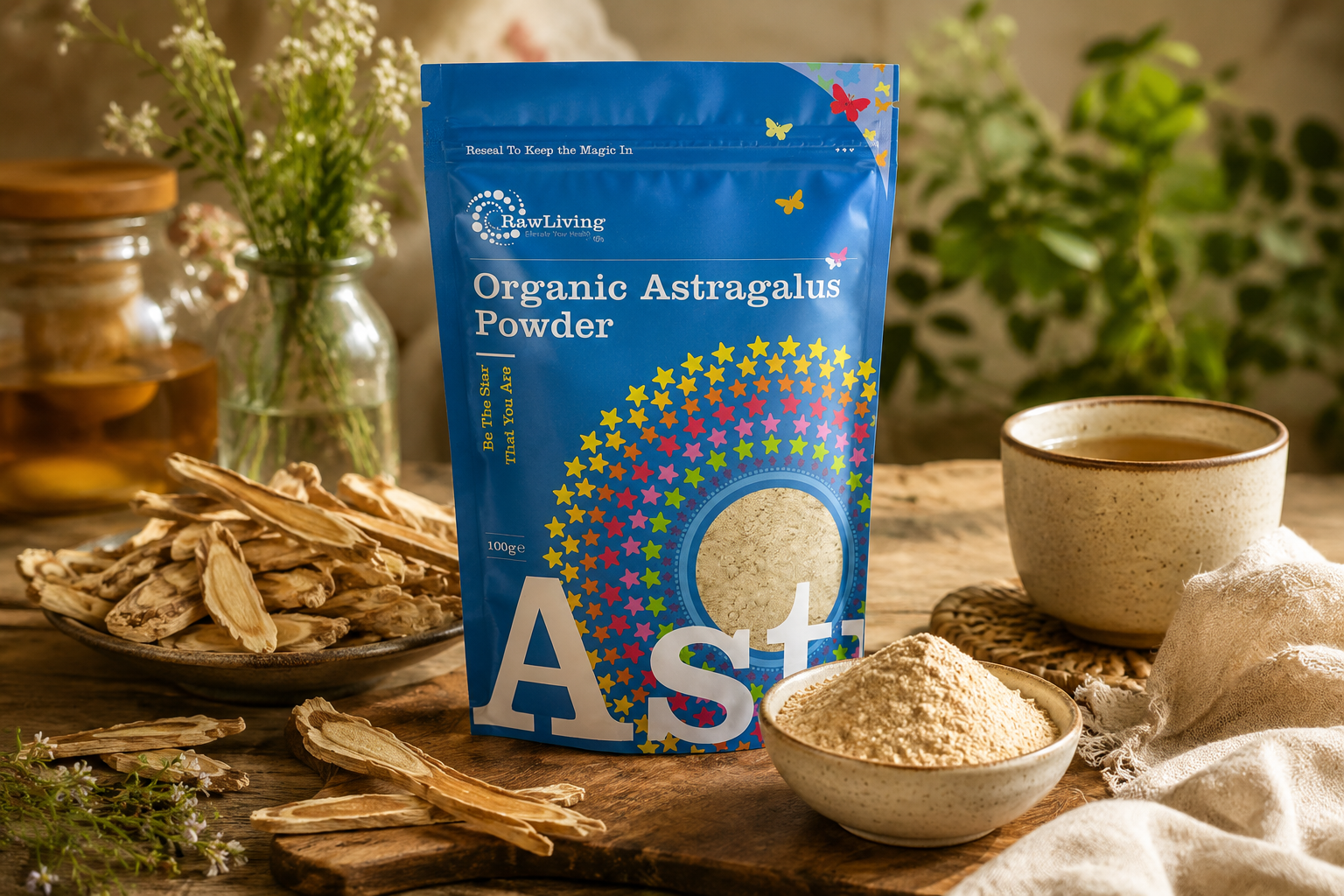
Astragalus, known in Chinese as Huang Qi, meaning "yellow leader," is one of the most celebrated tonic herbs in Traditional Chinese Medicine. With nearly 5,000 years of recorded use, it has earned its place as one of only 50 fundamental herbs in the entire TCM canon, and remains one of the most widely used roots in natural health traditions worldwide.
🍃 What is Astragalus?
Astragalus roots come from a flowering plant which grows in China and Korea, and it's considered one of the premier Chinese tonic herbs. Tonic herbs are recommended in Traditional Chinese Medicine to take on a regular basis to keep the body functioning optimally.
Chinese medicine looks at the body through a very different lens than Western medicine, and the tonic herbs are dispensed to support the body's natural resilience and keep it functioning optimally, rather than waiting until symptoms appear and then diagnosing and treating the resulting conditions. It really is the inverse of the modern pharmaceutically-driven medical industry, where doctors profit from sickness rather than health.
🏮 Astragalus Use in Traditional Chinese Medicine
In TCM astragalus has a strong connection with Wei Qi, the body's defensive Qi which supposedly circulates the body, protecting it against the cold. It was thought to provide immune support by regulating the opening and closing of pores, thereby keeping the skin warm.
In TCM, Wei Qi is the body's first line of defence - circulating at the surface, regulating the skin and keeping external influences at bay. Astragalus was considered one of its primary tonics, prescribed wherever that defensive energy was felt to be depleted.
It was also taken to increase overall vitality and support healthy ageing, and for this reason commonly taken alongside ginseng. The two together are known as the Shen Qi pairing, and is a foundational Qi tonic in TCM. Another common pairing for those seeking something gentler than ginseng is astragalus and codonopsis - Dragon Herbs offer an excellent capsule combining the two, which you can find here.
📜 A Brief History of Astragalus
Originally described by Chinese Emperor and founder of TCM, Shen Nung, nearly 5,000 years ago as one of the premier tonics, it was originally prescribed to treat leprosy and abscesses. It was Wang Haogu who first classified it as a defender of the body's Wei Qi. He was a prominent scholar working during a time of great upheaval in Chinese society, where resources were scarce and disease was rampant.
Wang Haogu had this to say about it: "It replenishes the defensive system...It boosts the Spleen and Stomach...Since it is able to treat cold damage with the cubit pulse not arriving, it supplements the kidney origin..."
It's also one of the few herbs in TCM that is also present in Persian traditional medicine, both cultures having come to similar separate conclusions regarding its use. A related astragalus species was also mentioned in the 11th century Canon of Medicine — a book by Persian polymath Avicenna. In this book he wrote that it might "strengthen the spleen and support vitality."
🌱 Astragalus Nutritional Profile
Astragalus is an adaptogen which is high in saponins, polysaccharides and flavonoids. It contains a unique substance called astragalosides, which are understood to play a role in the body's natural immune processes. Telomere length is considered an important marker of cellular health, and astragalosides have been of significant interest to researchers in this area.
Beyond its unique compounds, astragalus also contains a broad spectrum of essential minerals including selenium, iron, zinc, copper and manganese. Its selenium content is particularly notable - selenium is one of the minerals men and women alike are most commonly low in, and contributes to normal immune function and normal spermatogenesis.
🛒 How to Take Astragalus
Astragalus is available in tincture or powder form, and you can explore our range here. Raw Living's Tonic Power is a delicious chocolate-flavoured blend featuring astragalus and four other premier Chinese tonic herbs.
Also check out Dragon Herbs' Supreme Protector formulation, which is composed of the four "kings of defence": Astragalus, Reishi, Schizandra and Cordyceps, and the Super Tonic Herbs range, many of which include Astragalus.
❓ Frequently Asked Questions
Q: What is the difference between astragalus and other adaptogenic herbs like ashwagandha or ginseng? A: All three are adaptogens with long histories of traditional use, but they come from very different traditions. Ginseng and astragalus are both rooted in TCM, where ginseng is primarily considered a Qi tonic for energy and astragalus a Wei Qi tonic. Ashwagandha comes from Ayurvedic medicine and is often called Indian ginseng due to the structural similarity of its active compounds to those in ginseng. Each has its own character and the three are often taken together as complementary rather than competing herbs.
Q: Is astragalus safe to take every day? A: Astragalus is classified as a superior herb in TCM, meaning it is considered suitable for regular long-term use as a daily tonic. As with any herb, it is best to start with a smaller amount and build gradually. Those on medication or with existing health conditions should consult a healthcare practitioner before use.
Q: What does astragalus taste like and how do you take it? A: Astragalus has a mild, slightly sweet and earthy flavour - not unlike a light root tea. In its powder form it blends easily into soups, broths and warm drinks without overpowering them. It's also available in tincture form for convenience, or in capsules for those who prefer a no-fuss daily supplement.
Q: What is the difference between astragalus powder, tincture and capsule? A: Powder is the most versatile and typically the most economical form, it can be added to food and drinks and allows you to adjust the amount easily. Tinctures are liquid extracts that are convenient and easy to take on the go, often considered highly bioavailable. Capsules are the most straightforward option for those who want a simple, tasteless daily supplement with no preparation involved.
Astragalus has been a cornerstone of Traditional Chinese Medicine for nearly 5,000 years, and every product in our range has been selected with that same respect for quality and tradition in mind.


