


Longan, jujube and goji are three of the best-loved tonic fruits in Traditional Chinese Medicine, and unlike many superfoods they taste every bit as good as they are nutritious. Long enjoyed together in tonic teas and soups, here’s what makes each one special, from dragon eyes to a village of centenarians.
🍒 The Super Tonic Fruits Trio: Longan, Jujube and Goji
There’s often an association with superfoods being about health more than taste, many of them being woody and earthy in flavour and perhaps being less universally palatable. These three tonic fruits however are not only highly nutritious superfoods, they are also super delicious!
They all have a long historical association with traditional Chinese medicine, and have long been put together in tonic teas and soups. Each brings something different to the pot: longan a gentle, smoky sweetness, jujube a mellow, fruity depth, and goji a bright, juicy tang. In TCM they’re also described as having a harmonising combination of benefits.
🐉 Longan
Our newest addition to our Raw Living superfood collection is this delicious lychee-like fruit. It's got a delicious flavour and is a great source of vitamin C, you can grab them here.
When dried, its Chinese name is Long Yan Rou, meaning “dragon eye meat.” Longan (dragon eye)’s name is derived from the idea that when fresh, the fruit’s flesh is a translucent white colour. The black seed is visible through the flesh, showing like a pupil and giving the fruit the appearance of the bulging eyes of the Loong dragons.
It belongs to the same family as the lychee and has quite a similar, yet subtler, flavour profile. It dries into a deep golden colour, with a sweet and subtly smokey taste. Due to its delicious flavour, it’s commonly considered one of the most accessible tonics in TCM.
TCM associates it with both the heart and the spleen, often having been traditionally prescribed to those with an overworked, pale complexion. It’s common practice for women to drink a tonic of longan mixed with other herbs after giving birth.
🔬 Longan Nutritional Profile
Fresh longan is a notable source of vitamin C, with around 84mg per 100g, as well as riboflavin (vitamin B2) and potassium. Vitamin C contributes to the normal function of the immune system and to the reduction of tiredness and fatigue. Drying concentrates its natural sugars, which gives dried longan its sweetness.
🔴 Jujube
Jujube, also known as red or Chinese dates, aren’t technically real dates, but instead belong to the buckthorn family. It’s one of the oldest cultivated fruits in the world, with some sources dating back as far as 7,000 years! They're one of our best selling products for a good reason, check them out here.
Fresh jujube has an apple-like crunch, with a more crisp and tart flavour. Once dried however it has a texture more similar to that of a date; the drying process intensifies the sweetness and brings with it a warm and fruity aroma.
The Huangdi Neijing, an early classic of TCM, named it as one of the top five most important fruits. It was typically used in tonics as a “harmonising herb” and is associated in TCM with the spleen and stomach and a good night’s sleep.
🔬 Jujube Nutritional Profile
Fresh jujube contains around 69mg of vitamin C per 100g, along with potassium and small amounts of B vitamins and iron. It also contains polysaccharides, flavonoids and triterpenic acids, all plant compounds that researchers are currently interested in.
🌿 Goji
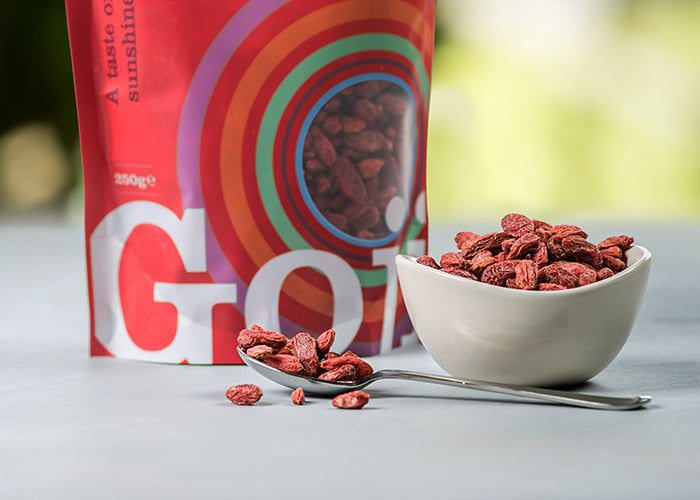
Last, but of course not least, is the well-known classic: goji berries. Arguably one of the most famous superfoods, it’s not only packed with vitamins and minerals but also contains a decent amount of plant protein.
The story goes that a travelling doctor discovered the berries growing in a village highly populated by residents in their 100s. The berries were said to be growing near the village well, where they would fall in and release their properties into the water below. The doctor took this to be the source of the villagers’ longevity and promoted their qualities from there.
It is also said that Li Qing Yuen, a legendary herbalist who was said to have lived to 256, ate goji berries daily as part of his tonic soup! In TCM, it is considered a tonic for the kidney and liver and its use as a medicine is first recorded in Shen Nung’s ancient text.
🔬 Goji Nutritional Profile
Goji berries contain vitamin A (as beta-carotene), vitamin C and riboflavin, along with minerals including iron, potassium, zinc and selenium. They’re also a source of plant protein and carotenoids such as zeaxanthin.
❓ Frequently Asked Questions
Q: What are tonic fruits? A: Tonic fruits are fruits that Traditional Chinese Herbalism has long enjoyed as part of everyday life, rather than only when something feels off. They are often simmered into teas and soups, and are valued as much for their flavour as for their nutrition. Longan, jujube and goji are three of the best-loved examples, and each has a long traditional association with TCM.
Q: Are jujubes the same as dates? A: No, jujubes, also known as red dates or Chinese dates, aren’t true dates. They belong to the buckthorn family, while dates are the fruit of the date palm. Fresh jujubes have an apple-like crunch and a crisp, tart flavour, while dried jujubes have a chewy, date-like texture, with a sweetness the drying process intensifies and a warm, fruity aroma.
Q: How do you make a longan, jujube and goji tea? A: Rinse a few dried jujubes and a small handful of dried longan, and simmer them gently in a pot of water for around 15 to 20 minutes. Add a teaspoon of goji berries for the last few minutes, then strain or sip as it is. The fruit is delicious to eat afterwards.
Q: Why are longan, jujube and goji so often enjoyed together? A: The three have a long shared history in TCM, where they are traditionally simmered together in tonic teas and soups. Their flavours work well together too. Longan is sweet and subtly smoky, jujube brings a warm, fruity sweetness, and goji adds a sweet, juicy tang. Each is also traditionally associated with different parts of the body: longan with the heart and spleen, jujube with the spleen and stomach, and goji with the kidney and liver.
Ready to try the trio? Browse the Super Tonic Fruits range at Raw Living and stir up a pot of tonic tea at home.


