


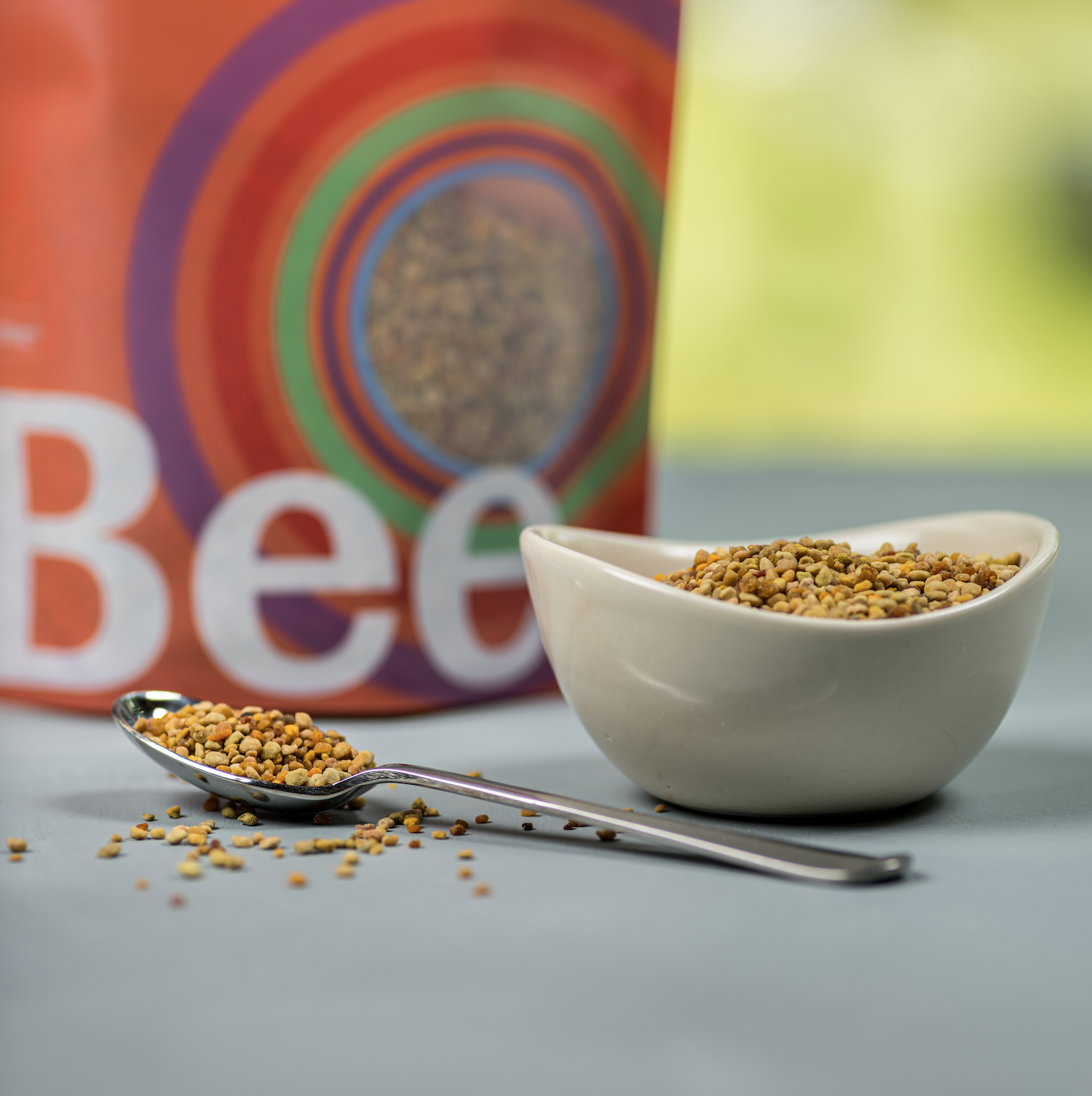
Bee pollen is one of nature's most extraordinary whole foods - a complete nutritional package gathered by bees from thousands of flowers and valued across cultures for centuries. Rich in protein, B-vitamins and minerals.
🌸 What is Bee Pollen?
Our organic bee pollen is one of our best-selling products - and for good reason. Bee pollen is a flower product, gathered by the bees and collected from the hives by the beekeepers. At Raw Living, we only work with beekeepers who work with the utmost respect for the bees and their environment, and who are sustaining the traditions of generations of beekeepers in preserving this most essential element of our biodiversity.
🐝A Brief History
The Egyptians called bee pollen "the powder that gives life," the Ancient Greeks "the food of the gods." Roman soldiers carried dried pollen cakes to keep them fed on long journeys, whilst the Navajo carried it in leather pouches as a sacred ceremonial substance. Shen Nung, the Chinese emperor credited as one of the founders of TCM, wrote about its benefits nearly 5,000 years ago.
Pollen is one of the oldest foods that can be found on written record. Unlike with most superfoods, there is no singular cultural origin it can be traced back to - but wherever there have been bees and flowers, humans have been found to be extracting both the pollen and the honey. What more can we say than that?
🏔️ Where Does Our Bee Pollen Come From?
Our bee pollen is from a remote region of the Carpathian mountains in Eastern Europe, free from any pollution. The type of bee bred is called the Apis Mellifera Carpatica, which is native to the region and known for its gentle behaviour towards beekeepers. Typically, beekeepers will be responsible for over 200 bee colonies, but the beekeepers of this region only have around 100 colonies each. All of this means that the bees receive the very highest quality care and attention - just as you would wish it!
❄️ How Is Our Bee Pollen Processed?
What makes our bee pollen special is the care with which it's transported. It's put into deep-freeze on collection, at a temperature of -18°C, and then transported within two weeks to the facility where it is dried at temperatures of less than 40°C. This process preserves all the natural enzymes, nutrients, and beautiful rich floral flavour.
🌿 What Nutrients Does Bee Pollen Contain?
Bee pollen is one of nature's rare, remarkable whole foods. It contains a vast array of nutrients, including around 35% protein - making it one of the best vegetarian sources of protein available. It is also high in essential B vitamins and a good source of minerals. It contains a broad spectrum of amino acids - including all eight essential amino acids - placing it among the most complete plant-based protein sources, comparable in amino acid profile to eggs. It is also rich in antioxidants, enzymes, flavonoids and fatty acids.
🍯 How to Use Bee Pollen
Bee Pollen is ideal for those days when you need to buzz around! It is very naturally energising. It's also ideal for keeping your nutrient levels up while fasting. It's a perfect superfood for kids, who love the sweet, honey-like taste.
Bee pollen is wonderfully versatile and easy to add to your daily routine. Add a spoonful to your breakfast, or just eat it off the spoon - it tastes that good. We don't recommend blending it, but it's wonderful stirred into porridge, yoghurt, or even guacamole. Try adding it to a trail mix like our Hi-Trail for an extra boost, or sprinkle it over a salad. You'll find lots of bee pollen recipes in Kate's book Raw Magic.
💚 Why We Love Our Beekeepers
We love the bees - and we are proud to work with beekeepers who do too. Our supplier says:
"A good beekeeper can't do this activity without loving his darling bees. They talk about them with admiration, they care about them and they will not do anything to harm the bees - it's a symbiosis between those two parts: beekeeper and bees. For a responsible beekeeper, the bees are like their own children. They truly love their bees."
🐝 What's The Difference Between Bee Pollen and Bee Bread?
Bee pollen and bee bread are both produced by bees, but they are quite different products. Bee pollen is collected fresh from the hive and dried for human consumption. Bee bread, on the other hand, is pollen that the bees have packed into the honeycomb and left to ferment naturally with honey and bee secretions - a process that can last several weeks.
This fermentation process means that bee bread has a slightly different nutritional profile from bee pollen, and some consider it easier for the body to digest. It has a stronger, more complex flavour - earthier and less sweet than bee pollen. Both are nutrient-dense whole foods rich in protein, B-vitamins, and minerals, and both are valued in traditional and natural health communities around the world. You can buy Raw Living Bee Bread here.
❓ Bee Pollen FAQs
Q: Is bee pollen suitable for vegans? A: Bee pollen is not considered vegan as it is an animal-derived product collected from bees. It is however suitable for vegetarians, and for many people who follow a predominantly plant-based diet but include some bee products. If you are looking for a plant-based alternative with a similarly impressive nutritional profile, spirulina or hemp protein are worth exploring.
Q: Is bee pollen safe if I have a pollen allergy? A: If you have a known pollen allergy or hay fever, it is worth proceeding with caution and consulting a healthcare practitioner before taking bee pollen. Some people with pollen allergies do react to bee pollen, and in rare cases reactions can be serious. If you do want to try it, starting with a very small amount and monitoring your response is the sensible approach.
Q: What's the difference between organic and non-organic bee pollen? A: Organic bee pollen comes from hives situated in areas free from pesticides, herbicides and other chemical treatments, meaning the pollen the bees collect is cleaner and less likely to carry residues. Non-organic bee pollen may come from areas where crops are treated with agrochemicals, which can find their way into the pollen. Given that one of the main reasons to take bee pollen is its nutritional purity, organic is always worth choosing where possible.
Q: How should bee pollen be stored? A: Bee pollen is best stored in the freezer to preserve its natural enzymes and nutritional content - which is exactly how ours is transported from the hive. Once opened, it can be kept in the fridge for everyday use. Avoid storing it at room temperature for extended periods, as heat and light will degrade the delicate nutrients over time.
🛒 Ready to Try Bee Pollen?
Whether you're new to bee pollen or a longtime fan, our organic bee pollen is as fresh, pure and flavourful as it gets - frozen at source and handled with care every step of the way. Shop Raw Living Organic Bee Pollen here →


